Author: Mr. Brahma Ghosh Raval

  • The Real Cost of a Slow Website (2026)

    The Real Cost of a Slow Website (2026)

    The story becomes more interesting when there is a mysterious killer in the house, a slow and lethal one. When it comes to any software enterprise, we often talk about surface level features, visible designs, and anything and everything that adds to the “wow factor”, but we rarely discuss about the silent killer, the one who is a threat to digital business: latency. Today, in 2026, a slow website isn’t just an annoyance; it is a nosedive, a direct hemorrhage of capital or goodwill. Latency equals lost revenue; the math is always brutal and unforgiving.

    At Prizor AITech, we’ve analyzed the data, and the results are clear. A delay of just one second doesn’t just annoy a user; it severs the trust they have in your brand. This is the website performance cost that most businesses fail to calculate until it’s too late. It’s not a technical metric; it’s a business crisis.

    Let’s break down exactly how this invisible friction is costing you, and why our engineers are obsessed with speed.

    The Revenue Hemorrhage
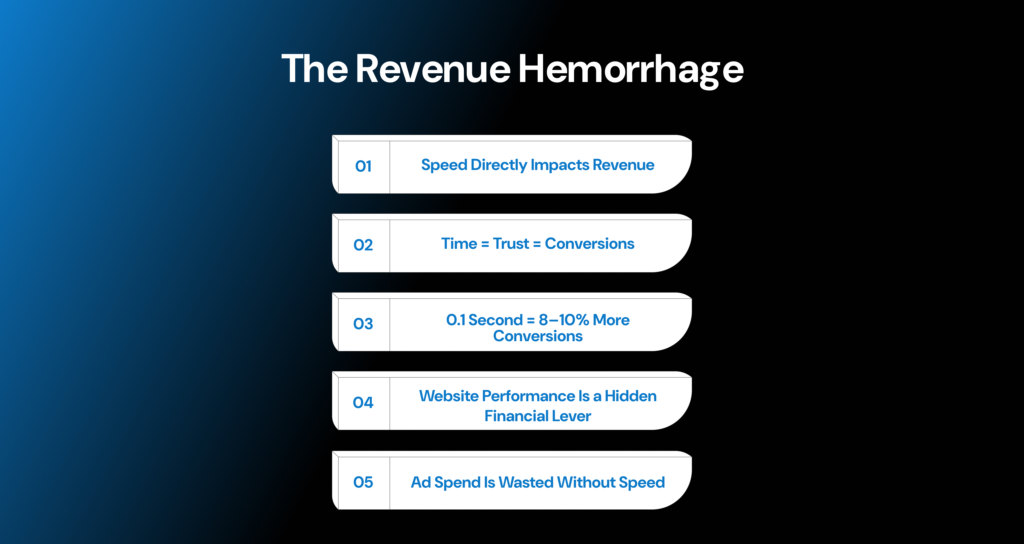
    There is a linear connection between speed and money, it is known to all. Past research and studies have shown that slow website revenue loss is immediately rectifiable and one of the most preventable financial leaks in a modern-day enterprise.

    When a potential client visits your platform, they are trading their time for your value. If you waste that time, they leave. It is a known fact that a slow site lowers sales, but the magnitude in 2026 is staggering. A mere 0.1-second improvement in site speed can boost conversion rates by nearly 8-10% in retail and travel sectors. Conversely, ignoring this leads to a massive website performance cost.

    Data from our internal study suggests that conversion rate impact speed is the single most critical lever for ROI. You can spend millions on ads, but if your landing page lags,you are essentially setting that budget on fire.
    The “Silent Killer” Metrics and the Core Web Vitals

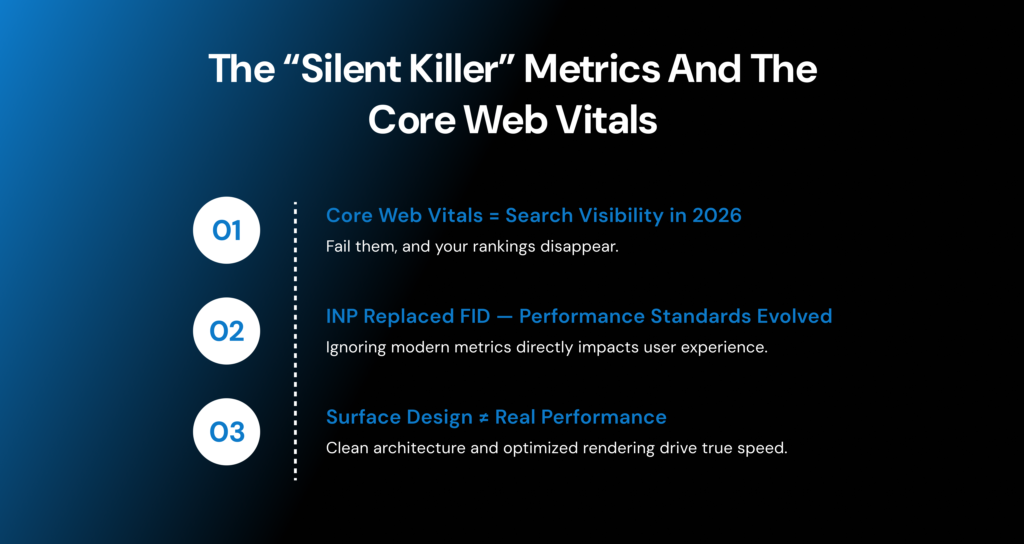
    In 2026, Google’s Core Web Vitals aren’t just recommendations; they act as guardians. If one fails to meet the requirements, one may disappear from search. There is something beyond Google SEO, it is a tangible Core Web Vitals cost that is associated with poor user-experience.

    We often come across many companies neglecting metrics like INP (Interaction to Next Paint), which replaced a critical standard that is the FID (First Input Delay). Sole focus on surface-level aesthetics may disrupt the underlying architecture; and this negligence amplifies the website performance cost.

    Real site performance optimization isn’t about slapping a caching plugin on a messy codebase. It’s about architectural purity, optimizing the critical rendering path, minimizing main-thread blocking, and ensuring that the Core Web Vitals cost doesn’t eat into your bottom line. As we often say at Prizor, if it doesn’t load instantly, it might as well not exist.

    Smaller screens are taking over. Mobile is the unforgiving frontier
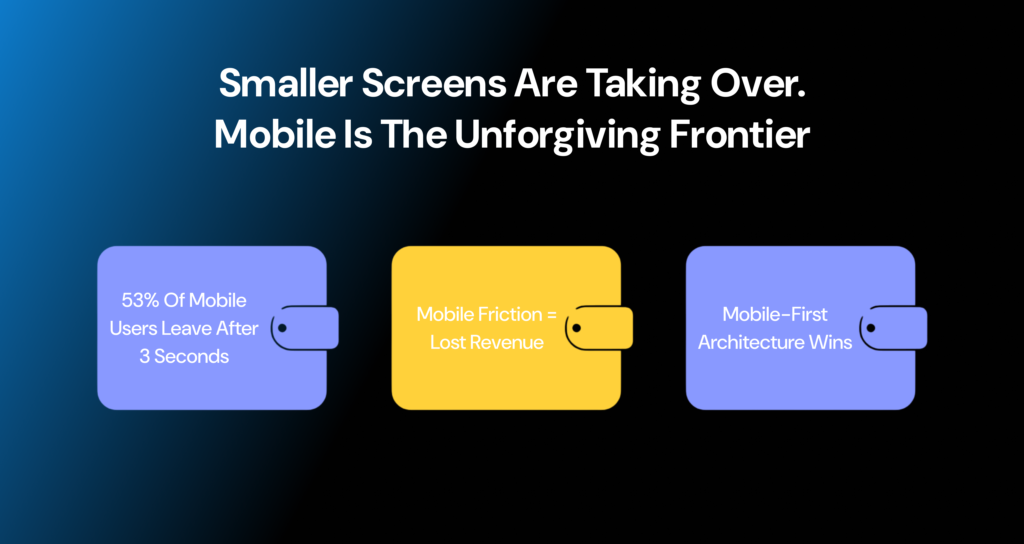
    The majority of your traffic is mobile, and mobile users are the least patient demographic in history. Data confirms that 53% of mobile users abandon sites that take longer than 3 seconds to load. This specific website speed impact is devastating because mobile users rarely give second chances.

    When we analyze speed and business metrics, we find that mobile friction is where the battle is lost. A desktop user might wait an extra second; a mobile user has already swiped away. This behavior proves that a slow site lowers sales faster on mobile than any other channel, says Yankit Patel, the Tech Lead at Prizor AITech.

    Addressing this requires a shift in mindset. You cannot just “shrink” a desktop site. You need a mobile-first architecture that mitigates the website performance cost inherent in cellular networks and varying device capabilities.

    The ROI of Milliseconds
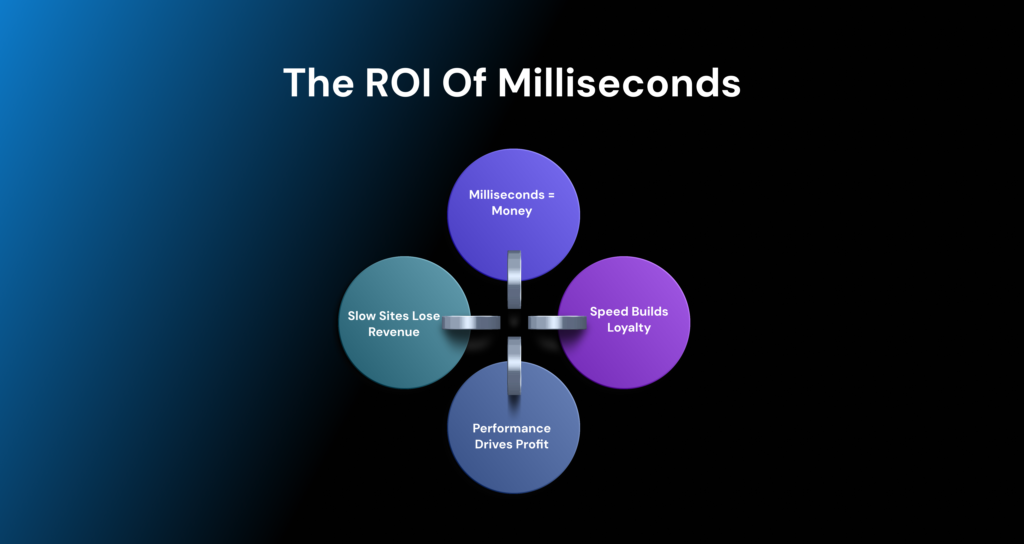
    Do we obsess over this? It’s because the website speed impact on customer retention is permanent. A frustrated user doesn’t just leave today; they are less likely to return tomorrow.

    Investing in site performance optimization is not an IT expense; it is a growth strategy. By shaving off milliseconds, you are directly reducing the website performance cost and increasing customer lifetime value. It is the highest leverage activity a technical team can undertake.

    When you look at speed and business metrics together, the picture becomes clear: performance is the foundation of profitability. The slow website revenue loss you avoid today contributes to the profit margin that can be celebrated tomorrow.

    Because the author says so:

    • In the 2026 digital landscape, there no room for sluggishness. The conversion rate impact speed has on your business is undeniable.
    • If you are not doing the audit of your digital assets, the time is now. Ask your Tech leads
      • Are you paying the website performance cost without knowing it?
      • Is your website performance cost higher than your competitors’?
    • Don’t let latency be the reason you lose. Optimize for speed, optimize for revenue, and remember: in the digital economy, fast is not just better; fast is the only thing that survives. The ultimate website performance cost is the success you fail to capture.

  • Going paperless in 3-months

    Going paperless in 3-months

    The 90-Day Metamorphosis – Transcending Legacy systems in a Digitally and AI Enabled World

    Decrypting the codex of transitioning from paper shelves to AI powered content management system in just 3 months.

    In my capacity advising the strategic direction of PRIZOR AITECH, I often witness a specific paradox in the industrial sectors. We see companies moving millions of dollars in inventory using physical infrastructure that is state-of-the-art, yet their information infrastructure is held together by fragile Excel sheets and paper trails.

    It creates a brand disconnect. You cannot claim to be a market leader if your internal processes are slower than the trucks leaving your warehouse.

    At PRIZOR AITECH, we have codified a transition path. We believe that going paperless is not a vague futuristic goal; it is a 3-month tactical sprint. It is the journey from static data to a real-time system that acts as a comprehensive ERP solution.

    Here is how we engineer that transcendence.

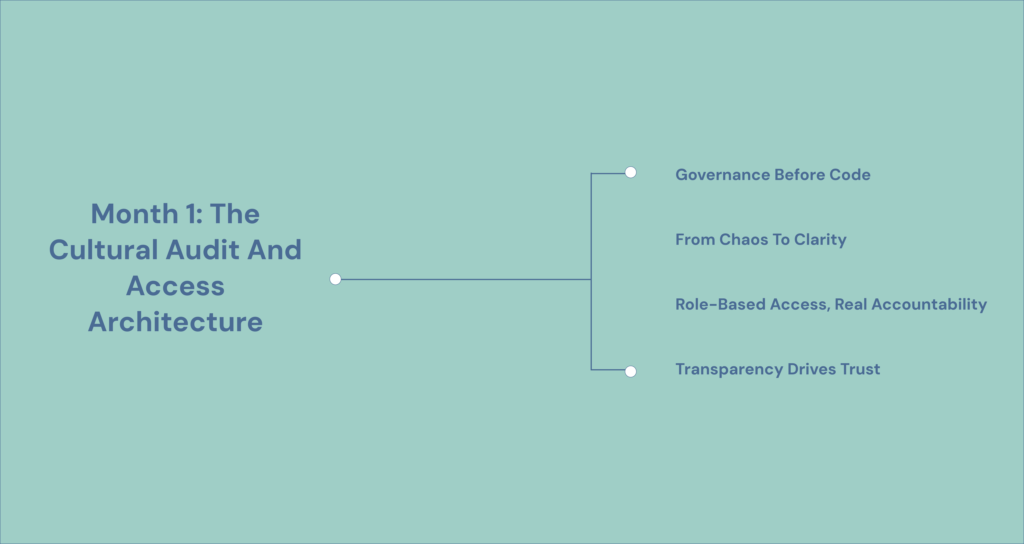
    Month 1: The Cultural Audit and Access Architecture

    The first month isn’t about code; it’s about governance. As an advisor, I always remind clients that technology is a culture amplifier. If your manual processes are chaotic, automating them only accelerates the chaos.

    We begin by digitizing the hierarchy. A robust content management system must understand who is acting. We replace “shared passwords” and unlocked filing cabinets with role-based access. When the operational framework gets integrated directly with the system payroll, the approach shifts, the lens that sees employees as rows on a spreadsheet changes. Employees’ performance, their work hours, and performance-linked compensation become transparent and automated. In today’s corporate world, fostering trust is the most valuable currency.

    Chief Everything Officer’s take on System Integration and the Fortress of Data

    While I look at the brand implications of this shift, the chief everything officer, Govind Gauswami, believes in taking charge of mission control. When we discussed the scope of this 3-month sprint, his belief remains unshakable when it comes to data security: speed comes second.

    Govind puts it best:

    “We are currently witnessing the most aggressive evolution of industrial technology in history. The scope of technology is expanding; it also opens avenues of weaving logistics automation, finance, and HR into one breathing organism. We are no longer imagining a standalone software that works for a process; we are building ecosystems that work for a purpose. A single API call in the warehouse can instantly trigger an action in the finance department; that’s real-time.

    However, this complex integration comes with the burden of responsibility; it keeps the developers up and thinking all day, because at PRIZOR AITECH, Data Security is always paramount and cannot be compromised. As we dismantle the silos of the past to build a unified system, we are essentially centralizing a company’s nervous system. The dire need for data security cannot be overstated. In this era, a data breach is not just an IT inconvenience; it is an existential threat to brand integrity. Our mandate at PRIZOR AITECH is to build systems that are porous enough to let information flow freely between departments, but hardened enough to be impenetrable to bad actors. If it’s not secure, it’s not intelligence; it’s just a liability.”

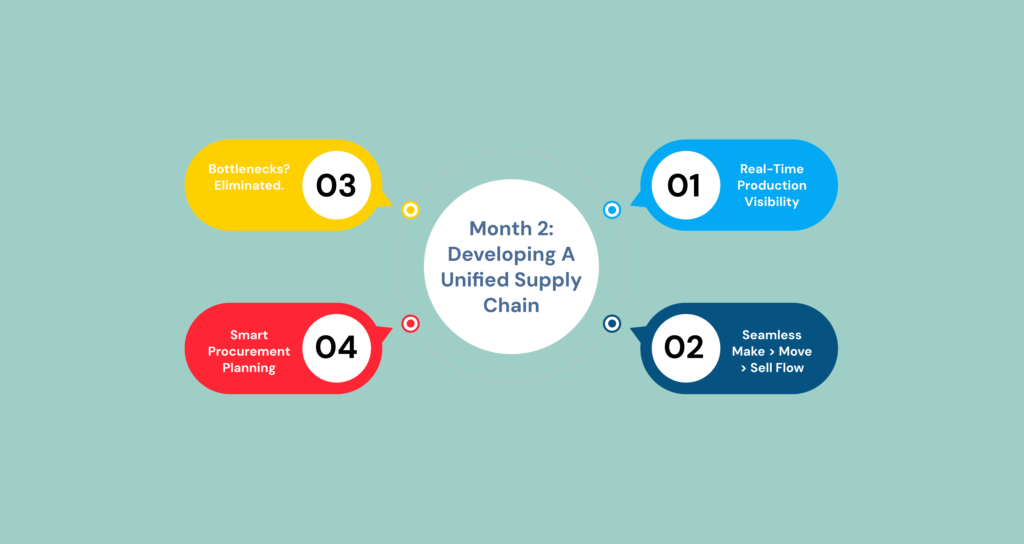
    Month 2: Developing a Unified Supply Chain

    Once Govind is convinced that the data security architecture is in place, the second month is all about narrowing the gap between Make > Move > Sell.

    We start by implementing digital checkpoints on the floor. We move from asking “What did we make today?” to knowing “What are we making right now?” through real-time production line management. This granular visibility prevents bottlenecks and reduces waste.

    Simultaneously, we address the disconnect between buying and selling. By linking procurement and sales management, the system learns to anticipate needs. It prevents the classic procurement panic by aligning raw material orders with real-time sales velocity, not just historical averages.

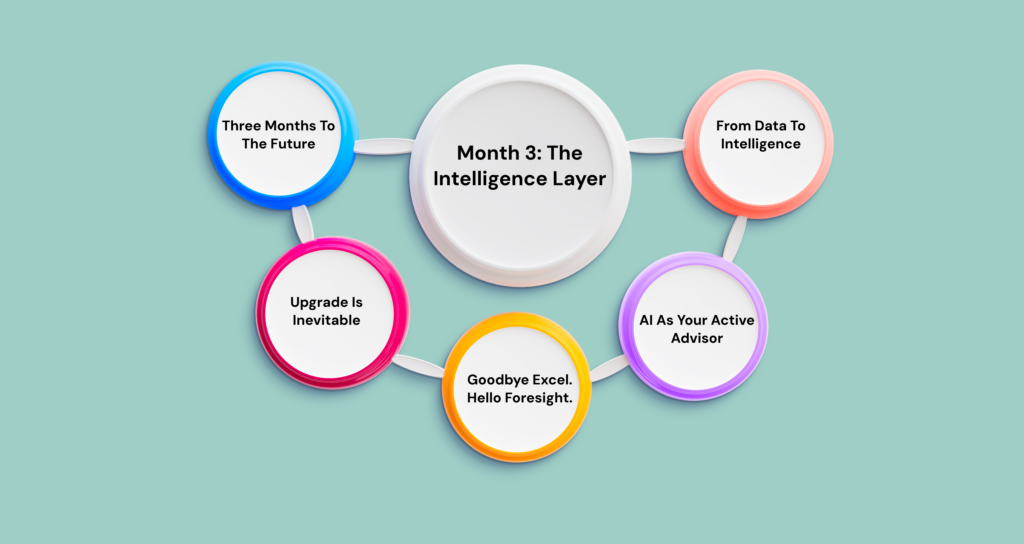
    Month 3: The Intelligence Layer

    In the final month, we stop looking at the screen and start listening to it.

    A legacy business looks at a document to see what happened last month. A digital business looks at a dashboard to see what is happening now. But a PRIZOR AITECH partner utilizes advanced report generation to see what will happen next.

    By transcending papers and Excel sheets, we enable AI agents to crawl your data. We turn a static system into an active advisor that can flag inefficiencies in your logistics automation before they impact the bottom line.

    The Verdict

    The transition to a digitally and AI enabled world is inevitable. The choice is not if you will upgrade, but when.

    At PRIZOR AITECH, we combine 150+ years of development experience with a “Human Controlled Intelligence” philosophy. We don’t just write code; we explore possible solutions leading to problem-solving. And the biggest problem facing the industry today is the paper anchor holding back digital ships.

    Give us three months. We will give you a future.

  • Why Senior Engineers Build Faster Than Large Offshore Teams

    Why Senior Engineers Build Faster Than Large Offshore Teams

    Demystifying the myth of Man-hours in the Tech Industry

    Discover how a handful of senior engineers can out beat an army of offshore developers

    The harsh reality of coding industry hits a fundamental truth that software development is a non-linear game. On the surface, the math seems very compelling and simple, while the approach often takes a detour and leads to project paralysis, technical crisis, and a delayed approach in delivering the output and making it to the market.

    A small team of senior engineers, irrespective of their background and experiences, if put together in a room, can ideate better product designs, deliver quick results, and at cost-effective results in the longer run. The software industry is output driven; it’s not about the geographical presence; it’s about the diverse expertise that reflects in the senior engineers’ productivity.

    Know it from Yankit, a veteran developer who counters the phrase “More the Merrier” with logic, and he is right? Let’s find out.

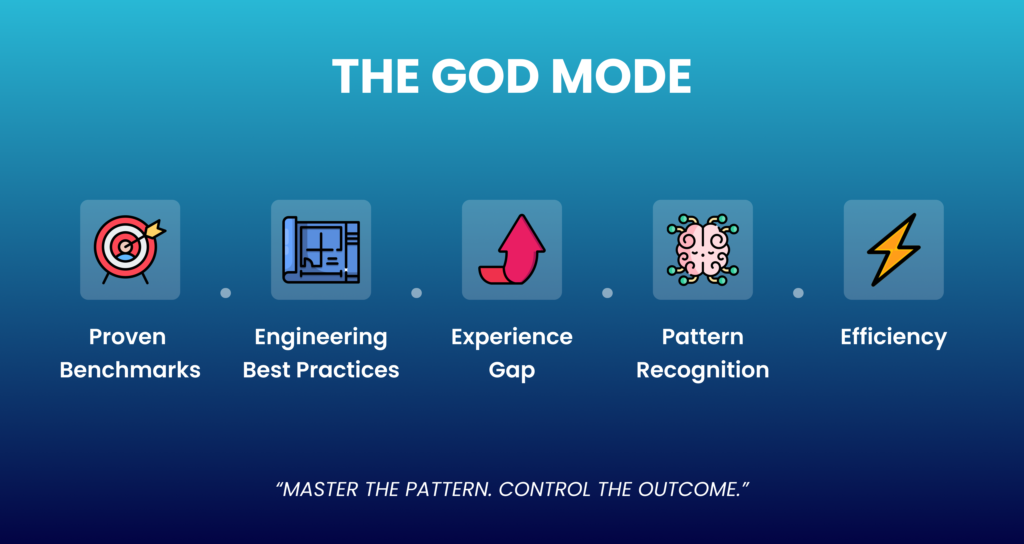
    The Philosophy of pattern recognition, disregarding the wheel of reinvention.

    The God Mode

    Why reinvent? Start from a benchmark and follow the engineering best practices.

    Offshore development teams, better known as junior developers, end up finding solution from GPTs and peers of same age and experience, that’s very natural. And they are not to blame. They clearly lack experience and expertise required to deliver; they are in the process of becoming a problem-solver; and one thing that differentiates senior vs junior developers is their ability to solve crisis with a pattern of a few clicks. Some call it software development efficiency, Yankit calls it the winning strategy.

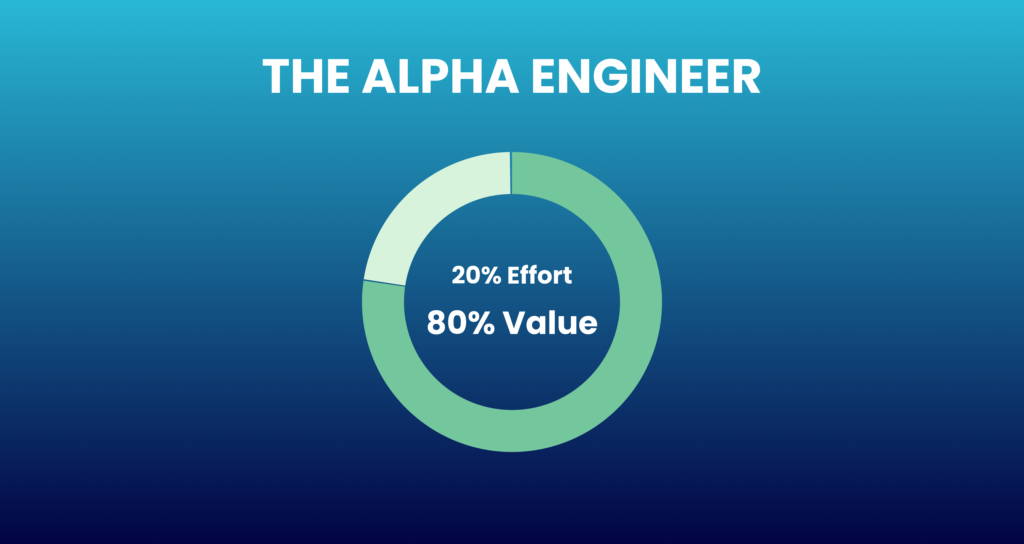
    The Alpha Engineer

    Speed is the measure that defines business values, not the line of codes. Is it true?

    A very generic metric fallacy is to measure the line of codes, but does it suffice? Or is the “ticket closed” a good metric to be considered? A senior engineer will always rely on the impact of the output that it draws:

    The engineering productivity metrics are built on senior engineers’ characteristics:

    • Ensure and inquire about the feature or updates whether the man-hours spent actually solves the problem.
    • The 80-20 approach applies, 20% work delivering 80% values.
    • Writing less codes and optimizing efficiency by abstraction of codes using third-party tools
    • In contrast to junior engineers or offshore development teams, that spends hours writing codes without piloting and failing just before the deadline. A senior engineer will deliver the desired solution in first go, that’s efficiency.

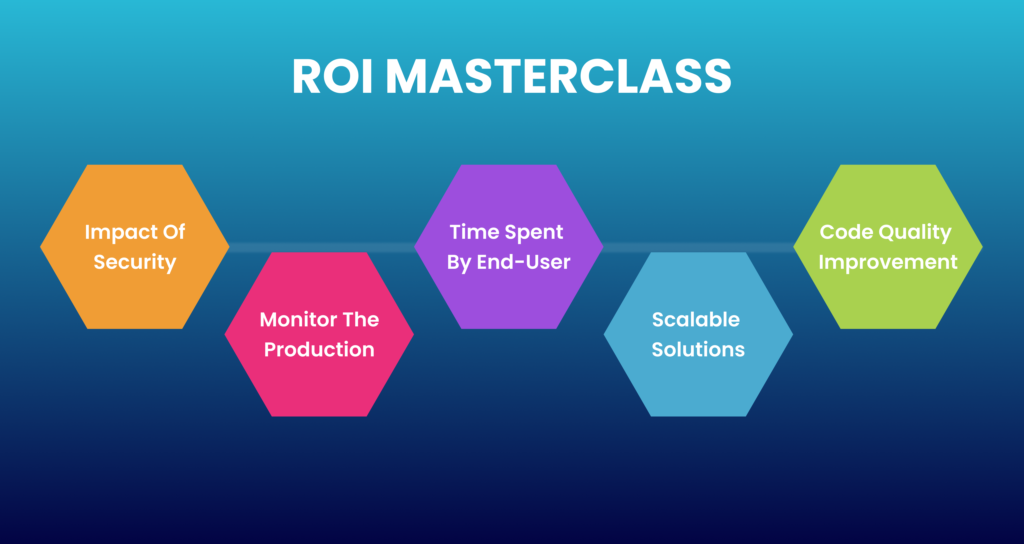
    ROI Masterclass

    A significant debt can be countered with productivity; that’s where the senior engineers’ productivity comes into play. The sole reason why senior developers deliver faster is their ability to think from the lens of ROI.

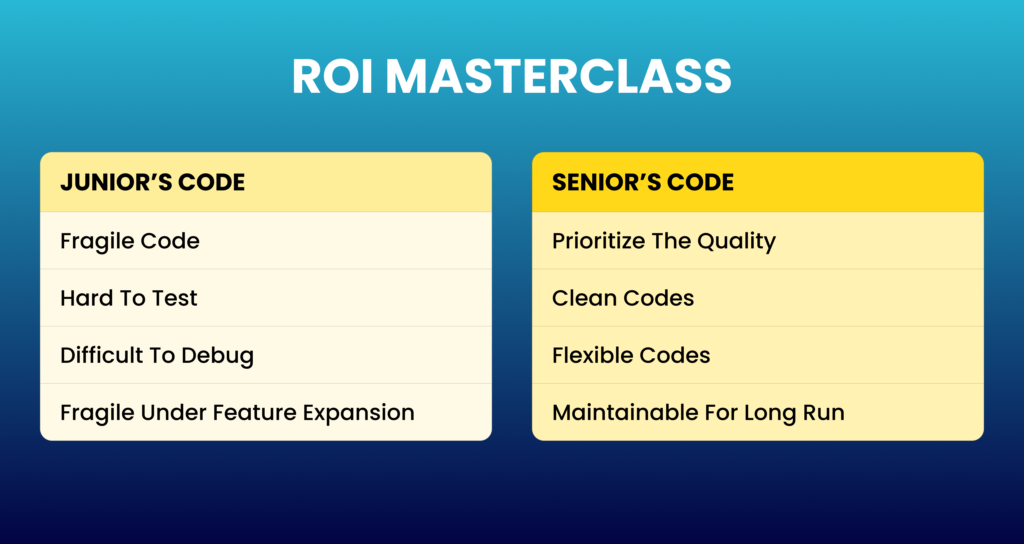
    Often, fragile code written by juniors may work in a specific scenario but fails to blend in the larger software framework. Fragile codes are hard to test, debug, and are prone to crash upon adding new features. This accrues technical debt, and on every request, the project is bogged down in maintenance.

    When senior vs junior developers, one thing that gets highlighted is the senior engineer prioritizing the quality, writing clean and observable codes. They prefer ensuring the codebase remains flexible and maintainable for the long-run.

    Total Domination

    While hiring juniors or onboarding offshore development teams, they often pick smaller and surface-level tasks like “login page or implement an API end-point”, while a senior brain owns the system and analyzes things like

    • Impact of security
    • Monitor the production
    • Time spent by end-user and load-time
    • Scalable solutions
    • Code quality improvement

    The holistic perspective is the reason behind why senior developers deliver faster, and it prevents the silos mistakes that are often found in large teams where a particular part of the larger system gets optimized at the cost of another.

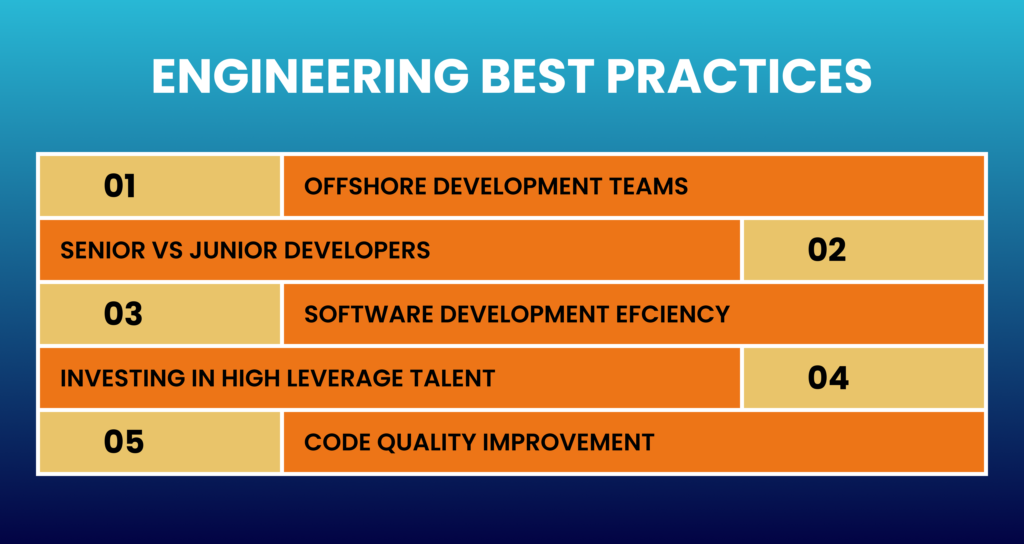
    Engineering best practices

    • While large offshore development teams can provide
    • It isn’t about senior vs junior developers, it’s about ownership and maturing.
    • Software development efficiency is determined by the agility, critical thinking, architectural foresight and the past coding experience of senior developers.
    • Investing in high leverage talent is crucial when it comes to delivering quality codes, and software product that thrives.
    • Code quality improvement isn’t just about quality, but the sustainable speed, agility and ability to create impact is paramount.

    A handful of alpha senior engineers marching in a lockstep formation towards a clear direction will outperform an army of coders who lack coordination, experience, and system ownership.